

Industry experts weigh in with their predictions for the coming year

As 2025 draws to a close, Raise the Bar asked a few folks in the legal industry what stood out to them this year and what they’re watching for in 2026. From new technologies and talent challenges to changing client expectations, their insights reveal a profession that’s evolving faster than ever. Their answers range from the practical to the provocative, offering a snapshot of where the profession is today and where it’s headed next.
— Interviews by Emily Kelchen, edited by Bianca Prieto



What was the most surprising legal or industry development you saw in 2025?
Ambrose: How intentional the legal market became. Firms hired fewer people, but with far greater precision, focusing on long-term fit and strategic need. Firm culture also evolved from a “nice to have” into a meaningful differentiator in recruiting and retention. At the same time, many firms revisited their hybrid work models, with some shifting toward more structured in-office expectations.
Esfeld: The speed at which AI embedded itself in legal practice was startling. Because the legal field often moves slowly, it has been interesting to watch courts try to react to the use and misuse of AI in litigation. The next frontier is transactional: how judges will treat AI-drafted agreements and the boundaries of their enforceability.
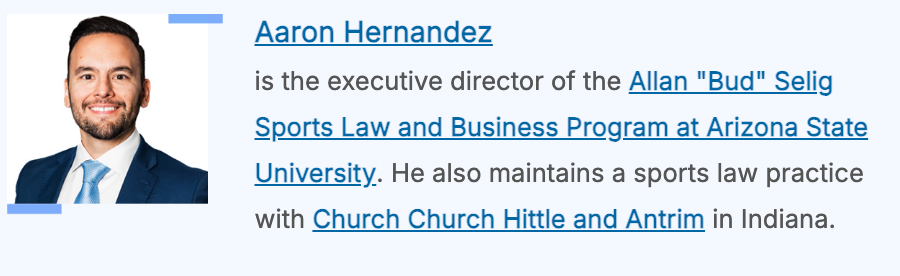
Hernandez: The college football coaching carousel was (and continues to be) an absolute circus. I am continuously asking myself how several of these guys can be the highest-paid public employee in their respective states, how state legislatures, who constantly complain about their fiscal situations, are able to fund massive buyouts and how smart people at universities sign over significant legal leverage to a head football coach.
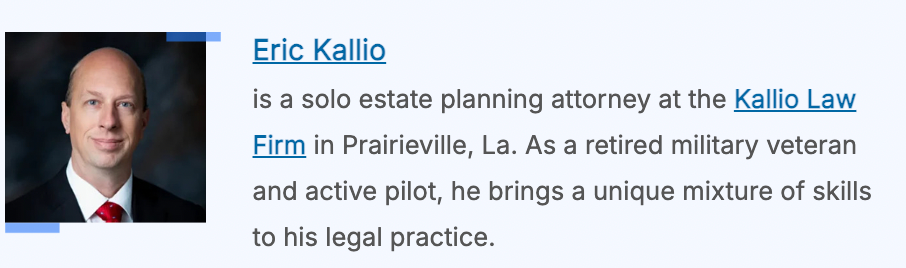
Kallio: How quickly artificial intelligence became woven into the administrative side of legal practice. What began in my office as experimentation rapidly turned into the routine use of AI tools for intake, scheduling, communications and workflow management.
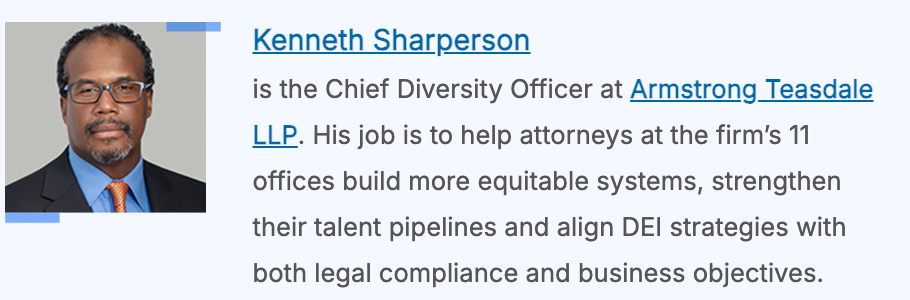
Sharperson: The most surprising development was the rapid acceleration of diversity, equity and inclusion into a core area of regulatory and litigation exposure. Even diversity, equity and inclusion practitioners who expected increased scrutiny were struck by how swiftly enforcement agencies, courts and industry oversight bodies pivoted from endorsing diversity, equity and inclusion initiatives to examining the legal sufficiency of their design and execution. The operative question shifted almost immediately from “Are diversity, equity, and inclusion practices beneficial?” to “Can your organization substantiate that its diversity, equity, and inclusion policies and practices are nondiscriminatory, evidence-based, consistently applied and legally defensible?” That shift occurred with a speed and intensity that materially altered the risk landscape for law firms and all businesses nationwide.
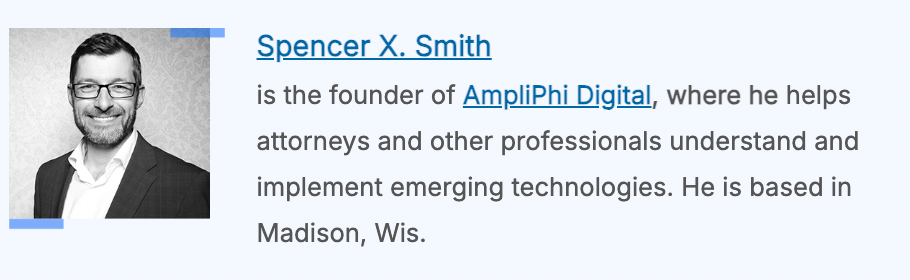
Smith: The speed of AI tool adoption at law firms. Traditionally, the legal industry has taken a measured approach to implementing new technologies, but there is an overwhelming sense of urgency regarding AI.
Wilhite: The arrival of AI wasn’t surprising—we all saw that coming. What truly surprised me was how aggressively private equity entered the legal industry this year. When profit becomes the primary driver, you lose local expertise, community connection and the kind of homegrown advocacy that we provide that truly benefits the people we serve.
Was there a moment this year that made you rethink how you do your work?
Ambrose: There wasn’t a single defining moment, but as my legal recruiting community continued to grow, so did my inspiration. Over the course of the year, I attended several in-person events with NALSC, the National Association of Legal Search Consultants, where I had the opportunity to connect with phenomenal legal recruiters, collaborate with like-minded professionals and walk away with a renewed sense of purpose and energy for this work.
Esfeld: I usually work with larger corporations. Working with a broader set of small businesses, such as, startups, community enterprises and clients with limited resources has reshaped my perspective. Helping those small clients tackle big problems demanded sharper creativity and efficiency, and that discipline has strengthened my overall practice and the way my team approaches complex matters to the benefit of all my clients.
Hernandez: I was in Australia and spent significant time with their sporting entities in Melbourne. One thing that the Aussies do differently is that their sports system is truly socialist. We usually think of that approach generally as something anti-American, but I couldn't help but notice several things: stability, clear rules, parity, sustainability and the national commitment and access to sports.
Kallio: There wasn’t a single defining moment, but rather a steady realization that responsibly integrating AI into my administrative processes allowed me to devote far more time to substantive client work. As routine tasks became more predictable and automated, I was able to focus more deeply on client needs and legal analysis.
Sharperson: Yes. The moment that stayed with me happened during a meeting with our managing partner, where we discussed how our diversity, equity and inclusion initiatives should fit into the firm’s broader strategic priorities. Hearing, firsthand, the tension between our long-term values and the immediate legal and market pressures the firm was facing made me pause. It was a candid conversation—one that made clear that diversity, equity and inclusion could not be a standalone initiative but had to be immersed in the overall strategy of the firm.
Smith: Using the voice-to-screen AI tools (i.e., dictation that actually works) has helped me expedite taking ideas from my head to a screen. This has freed up considerable time to meet more with clients and think deeply about my work because I know the digital version of those thoughts can now manifest more quickly.
Wilhite: In light of recent changes, we know some in our Spanish-speaking communities may feel uncertain about turning to the legal system. Our firm has responded by strengthening our outreach, resources and support for these clients.
What’s the biggest opportunity you see for lawyers headed into 2026?
Ambrose: Leveraging AI to their advantage and not being afraid to learn it. The attorneys who start adopting AI and who know how to use it properly are going to have an edge in the market.
Esfeld: The real opportunity lies in using AI judiciously by leveraging it to eliminate routine friction without outsourcing judgment. When applied well, it can streamline tasks like timekeeping and free lawyers to focus on strategy and problem-solving. Those who integrate new technology thoughtfully will be best positioned to capture emerging client needs.
Hernandez: My personal belief is that artificial intelligence is going to be so, well, artificial, that writing with a unique voice is going to be like ingesting organic food. I feel like I can already tell when this is the case. Hunker down and put in a little extra time keeping those writing muscles in tip-top shape.
Kallio: The responsible use of emerging technologies. When limited to intake, scheduling, communication and other non-substantive functions, AI can improve efficiency without substituting for legal judgment. This gives lawyers more space to concentrate on counseling, strategy, and careful analysis, areas where the value of the profession truly lies. Firms that adopt these tools thoughtfully and ethically will be well-positioned to enhance both service and workflow.
Sharperson: The biggest opportunity for lawyers in 2026 is to position themselves as integrators of law, culture and organizational strategy. The profession is entering a period where clients are not just asking, “What is the legal risk?” They are asking, “How do we operationalize compliance, culture and governance in a way that strengthens the organization?” Lawyers who can navigate that intersection—who understand diversity, equity and inclusion implications, AI governance, workplace dynamics and regulatory expectations—will become indispensable strategic advisors.
Smith: Building domain-specific knowledge through the use of AI tutors. The internet, through written content or videos, has allowed us to educate ourselves passively. AI allows us to ask pointed and highly specific questions to deeply understand subject matter. Lawyers who use AI tutors to develop niche expertise will thrive.
Wilhite: Operational excellence. New systems and technologies give firms the ability to move cases faster, communicate better and deliver justice more efficiently. The firms that embrace streamlined operations will be able to get clients better results in less time. That’s my focus going into 2026: faster processes, higher-quality justice and an even better client experience.
What’s a risk lawyers are underestimating right now?
Ambrose: Many lawyers underestimate how quickly career optionality can narrow. Waiting too long to make a move, diversify experience or build relationships can quietly limit future opportunities, especially in a market that’s becoming more selective.
Esfeld: We underestimate how dependent good lawyering is on strong support teams. Even as technology expands, the profession faces a shrinking pipeline of legal assistants and paralegals. If that trend continues, firms may find themselves with sophisticated tools but too few people who know how to keep matters moving.
Hernandez: From an athletics perspective, I think that the rule of law has experienced some erosion in the last year, generally, and now what is guiding the overall systemic changes in college athletics are plaintiff lawyers and a couple of judges. The resulting system is pure chaos, with no strategic direction, and a lack of leadership because all entities are so scared of being sued and losing. Ultimately, I think there could be a pendulum swing against the profession, as judicial decisions are blowing up the collegiate model but providing no meaningful structures or solutions for its continued viability.
Kallio: Many lawyers underestimate the risks associated with over-reliance on AI, both by attorneys and by the public. Some practitioners assume these tools are more reliable than they are, overlooking the tendency of AI to produce confident but inaccurate responses. At the same time, clients increasingly arrive with AI-generated misinformation that shapes unrealistic expectations about their legal matters. Recognizing and addressing these influences is becoming an essential part of competent representation.
Sharperson: Many are underestimating the risk embedded in informal decision-making—off-the-record evaluations, ad-hoc promotions, “common sense” hiring judgments and unmanaged technologies. These are the spaces where bias, inconsistency and liability breed. Organizations that cannot document how decisions are made, or why, are going to face significant challenges in the coming years.
Smith: Complacency. To use the Alice in Wonderland idea, we're now in the Red Queen's Race, where we must run just to stay still. Biding your time and hoping technology doesn't disrupt your practice is not a viable strategy moving forward.
Wilhite: Losing the personal touch. With so many firms racing to implement AI and automation, there’s a real risk of forgetting that law is still a human service. Technology is powerful, but it can’t replace meaningful client connection, empathy or trust that comes from showing up for people during one of the hardest chapters of their lives. Balancing innovation with humanity is one of the biggest challenges facing lawyers today.
What’s one skill you think every lawyer should focus on developing next year?
Ambrose: Networking! Networking can change everything. Whether you’re a 3L about to graduate or a seasoned litigator looking to expand your circle, it is vital to build meaningful connections and open new doors.
Esfeld: The ability to interrogate technology rather than simply adopt it. Lawyers need to understand how tools work, so they can identify what they miss and where human judgment must override automation.
Hernandez: Be kind. Loud, combative voices are flooding our airwaves today. Friendly, calm, solution-oriented attorneys are a nice change of pace.
Kallio: Lawyers should develop a basic understanding of how to interact effectively with AI systems. A well-framed question or instruction can make the difference between a useful administrative tool and an unreliable output. Knowing how to set clear parameters and use these systems responsibly will become an important skill in managing an efficient practice.
Sharperson: Cultural intelligence as a professional competency. Lawyers increasingly operate in environments where cross-cultural understanding influences negotiations, communication, risk assessment and client trust. The sharper your ability to understand people and context, the better your legal work will be and the more indispensable you become.
Smith: Deep niche expertise. Think in terms of your practice area and ask yourself the question, "If I could get demonstrably better than those with whom I'm competing for business, how would that position me in the marketplace?"
Wilhite: Adaptability. The landscape is shifting quickly—AI, new regulations, operational expectations. Lawyers who can adapt, learn new systems and stay flexible in their approach will thrive. Those who resist change will fall behind.

You're all caught up!
Thanks for reading today's edition! You can reach the newsletter team at raisethebar@mynewsletter.co. We enjoy hearing from you.
Interested in advertising? Email us at newslettersales@mvfglobal.com
Was this email forwarded to you? Sign up here to get this newsletter every week.
Raise the Bar is written and curated by Emily Kelchen and edited by Bianca Prieto.



Comments ()