
Are you constitutionally fluent?
First Amendment literacy is becoming table stakes across practice areas
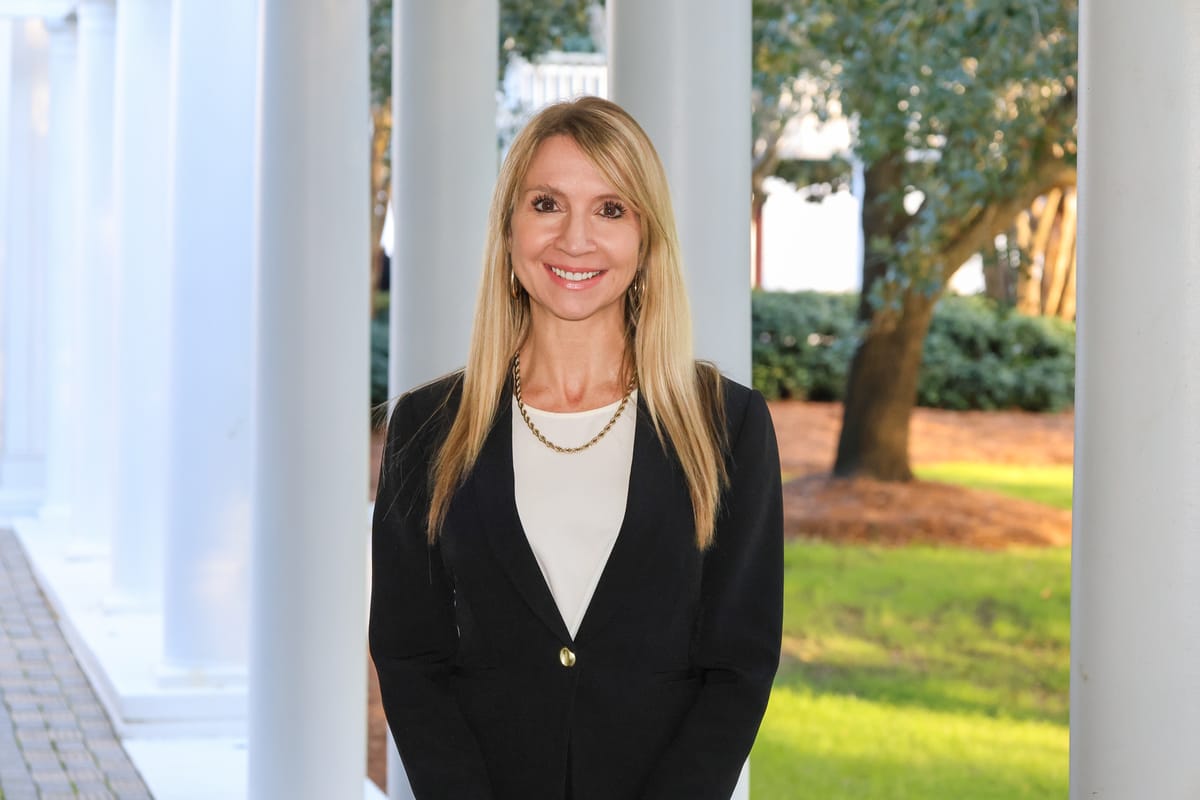

At a moment when government authority and individual liberties are colliding in new and highly public ways, the launch of a First Amendment clinic feels less like an academic exercise and more like a strategic response. But defending constitutional freedoms isn’t Denise Mayo Harle’s only goal. The seasoned litigator sees the First Amendment Clinic at Florida State University College of Law as the best way to set law students up for success in a profession that is rapidly changing.
—Interview by Emily Kelchen, edited by Bianca Prieto
You had a successful career as a litigator and were a finalist for a seat on the Florida Supreme Court, but you chose to move into academia. What gap did you see in legal education or practice that made you decide that opening a First Amendment clinic should be your next step?
After many years in appellate and constitutional litigation, I reached a point where I wanted to invest more directly in the next generation of lawyers. I wasn’t looking to leave practice so much as to multiply its impact.
We’re also living in a moment when First Amendment issues are no longer confined to a small corner of the law. Questions about speech, religious liberty, association and the role of government arise in education, in the workplace, in business and across digital platforms. That means we need lawyers in every field who are constitutionally literate and comfortable navigating those tensions.
What kind of cases is the clinic taking on?
The clinic focuses on live-client matters involving core First Amendment freedoms—speech, press, religious exercise and association. The clinic defends these fundamental liberties in a wide range of contexts, including public forums, educational institutions, digital platforms, government settings and private workplaces. These are often complex cases with developing facts and significant stakes not only for the client but for the broader legal landscape.
Is Florida a hotbed of First Amendment violations? I thought it was the “Free State of Florida?”
First Amendment questions are being litigated across the country, and Florida is no exception. I would not frame it in terms of any one state being uniquely problematic. In fact, our clinic is currently representing clients in both state and federal courts around the country, at both the trial and appellate levels.
We are in a period when the boundaries between individual rights and governmental authority are being tested in new ways. Courts play a vital role in clarifying those boundaries, and lawyers are essential to that process.
For lawyers who don’t practice constitutional law, why should they care about what happens in a First Amendment clinic?
The First Amendment touches almost every area of practice. Lawyers advise clients every day about what they can say, publish, regulate, require or prohibit.
Clinics are also one of the most effective ways that law schools train practice-ready lawyers. Our students are counseling clients, making strategic decisions, drafting filings and thinking through the practical consequences of every argument they advance. They see how constitutional principles operate in real people’s lives and in real institutions. That kind of experience stays with them regardless of the practice area they ultimately choose.
As the practice of law (and society in general) changes with the adoption of AI, what skills do you find young lawyers most need to develop today?
The core skills have not changed, but they have become more important: critical thinking, careful analysis, precise writing and independent judgment. Technology can assist with research and efficiency, but it cannot replace the lawyer’s role in framing a legal issue, advising a client or standing before a court and taking responsibility for a position.
Clinics are particularly well-suited to developing those skills because students must make real-time, critical decisions. I strongly urge all of our clinic students to rely on their own analytical thinking and writing abilities, and to double- or triple-check everything in their work product for accuracy.
Has supervising students changed your own perspective on the practice of law?
It has brought me back to the fundamentals—our responsibility to clients and the importance of the work we do. When I supervise students, I have to articulate why an argument works, why a strategic choice matters and how to balance competing considerations. That forces me to be more deliberate about my own reasoning.
It's also been really encouraging. Students bring an energy and sense of purpose that reinforces why this profession matters. And they are smart! It's exciting to see what the next generation of lawyers can do when we give them a challenge and scaffolding.

You're all caught up!
Thanks for reading today's edition! You can reach the newsletter team at raisethebar@mynewsletter.co. We enjoy hearing from you.
Interested in advertising? Email us at newslettersales@mvfglobal.com
Was this email forwarded to you? Sign up here to get this newsletter every week.
Raise the Bar is written and curated by Emily Kelchen and edited by Bianca Prieto.

Comments ()