
Inside the courtroom through an artist’s eyes
Award-winning artist Carole Kabrin on sketching live trials
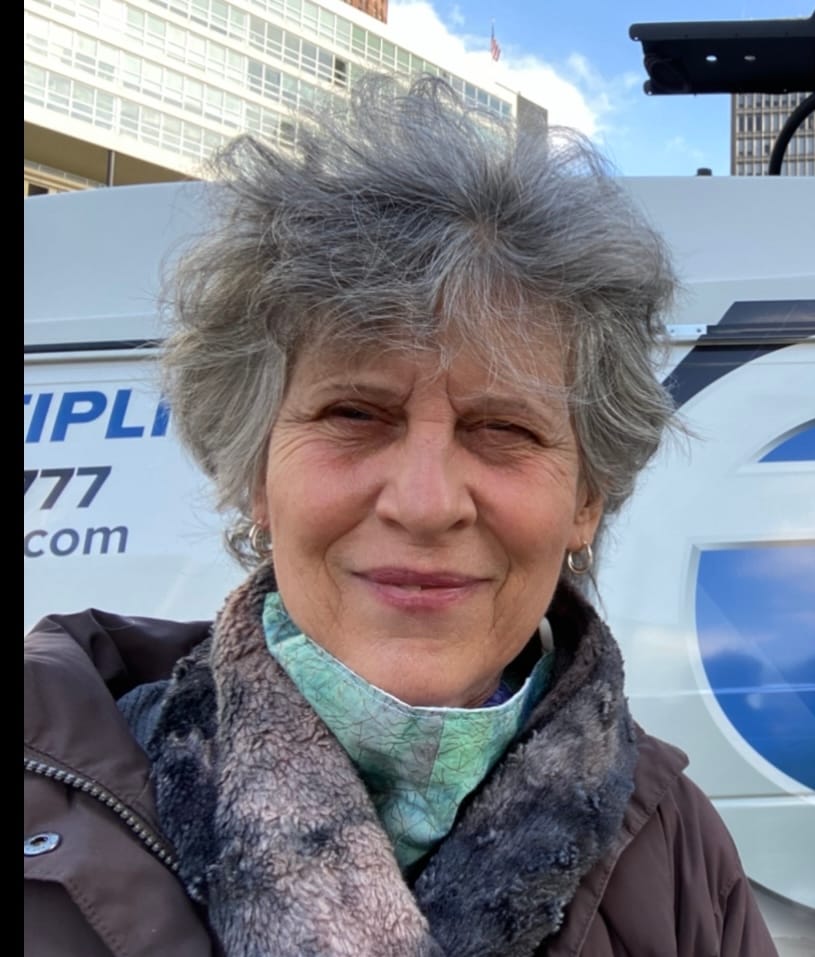

If life imitates art, Emmy award-winning courtroom artist Carole Kabrin should be teaching trial advocacy. She’s spent over half a century distilling some of the most important courtroom action during this time —think Bush v. Gore and the Oklahoma City bombing trials—into images that convey the weight of justice at work. She sketched out a few thoughts about what trials look like from the gallery for this issue of Raise the Bar.
—Interview by Emily Kelchen, edited by Bianca Prieto
How did you find your way into courtroom art?
Being a television news artist was and is my passion. Unlike many of the courtroom artists out there, I went after this profession; I didn't just fall into it. I practiced and practiced! I trained for it by drawing at the State Fair and outside a bar at the Holiday Inn at night. I pursued it.
For 12 years, the U.S. Supreme Court was my major assignment, but I wore a pager, and I could be on a plane and on assignment anywhere in the country at a moment's notice. I loved it!
Today, I work as a freelancer. My art is used by CNN, FOX, NBC, CBS, ABC, ESPN, Reuters, AP, newspapers and appears in books and documentaries like the one PBS just produced about the Federal Court of the Eastern District of Michigan. I also do commissioned work for law firms and individuals.
What moments tend to become “the” image of a trial?
My reporter will tell me what they need, but if I am drawing alone, I have to intuitively know what to draw and who to draw. Usually, it is the defendant, the witnesses on the stand, the attorney questioning, or the judge's expression.
If something odd happens—for example, if someone starts crying or yelling—and it is important, I will capture that!
Probably the most unique example of that is during the “Son of Sam” case in New York. I got permission to sit in on that hearing. I considered myself “in training,” and I wanted to see how the network artists did it.
The boyfriend of one of the women Berkowitz had killed was in the courtroom. When he thought the hearing was over, he ran for the defendant, screaming. I was ready to hit the ground, but the network artists didn’t hide. They stood up and started frantically drawing.
What I realized then was that I needed to learn to draw really fast and have nerves of steel.
What are you focusing on when you try to capture a trial?
Aside from capturing a true likeness, gesture and movement are everything to me. In other words, drawing a sketch that looks alive and not stiff is my goal.
If you look at my drawings, you will notice I always draw the attorney in the middle of speaking or gesturing. I try to create like a "stop action" moment, not a still-life drawing of fruit in a bowl.
Speaking of fruit, you have a story about that.
Yes, ABC News sent me to draw the Oklahoma City bombing trial. The judge in the case, Judge Richard Matsch, was tough and strict with us. He had to be with us, “press,” and I was afraid of him. He would count the seconds on his watch and lock out anyone who was late.
Because Denver was two hours behind New York time, my drawings had to be completed by noon for that evening’s World News Tonight. I had such tight deadlines, and usually no time to eat, so I kept fruit from the hotel breakfast bar in my portfolio.
I had forgotten about the bag of fruit that I had left in my portfolio the night before, and in my hurry to get to court on time, I forgot about the trail of ants I noticed going from my outside door to my portfolio that morning. When I got to the courtroom and took out my drawing equipment, I noticed there were ants on my drawing board. In two minutes, I was covered by a whole patrol of them. But I had no time to worry about ants; I was more afraid of Judge Matsch. Plus, I had that noon deadline.
I was trapped. I couldn’t leave or move, so all I could do was start drawing. My point is, this is the focus that a courtroom artist must have. Even if a bomb were to go off in the courtroom, or an earthquake, which did happen, a courtroom artist must draw.
How do you balance the value of capturing something like an emotional outburst with the broader story, which may not be all that exciting?
Personally, I take being fair very seriously. I have to evaluate if someone screaming is part of the story or not. It is very easy to accidentally slant a story, even by accident. I try to be very fair.
I make sure that I don’t draw someone looking guilty, unless they are sitting there looking guilty.
When I was drawing [Manuel] Noriega in his Florida trial, my producer yelled at me because I was drawing Noriega too good-looking. He angrily grabbed my charcoal pencil and made pock marks on my drawing of Noriega's face. Well, Noriega did have pock marks, but…
And I do not judge guilt or innocence. I always keep in mind that everyone is innocent until proven guilty. I am very clear on that, and it means a lot to me.
I’m like a camera. I draw what is in the room.
Are there any ethical guidelines that limit what you can or can’t depict?
I am not allowed to draw young children on the stand, and I do not draw the true likenesses of the jury.
I have to be careful about this. I once had an interesting moment when drawing a child testifying. l merely drew the shape of the face and just a few marks for the features, and it looked just like the kid!
What advice would you give trial lawyers based on what you have observed during your career?
I'm an artist, not an attorney. I think they should turn towards me so I can draw a good portrait of them!
You're all caught up!
Thanks for reading today's edition! You can reach the newsletter team at raisethebar@mynewsletter.co. We enjoy hearing from you.
Interested in advertising? Email us at newslettersales@mvfglobal.com
Was this email forwarded to you? Sign up here to get this newsletter every week.
Raise the Bar is written and curated by Emily Kelchen and edited by Bianca Prieto.

Comments ()